Passer aux informations produits
1 de 15

Onduleur Pur Sinus 1000W 12V (Nouvelle Édition)

Onduleur Pur Sinus 1000W 12V (Nouvelle Édition)

Prix habituel $255.00 CAD
Prix habituel $340.00 CAD Prix promotionnel $255.00 CAD
Promotion Épuisé
Quantité
DESCRIPTION

Débloquez une alimentation hors réseau fiable avec l'onduleur à onde sinusoïdale pure Renogy 1000W 12V (Nouvelle Édition), convertissant l'énergie de la batterie CC en une sortie CA propre de 120V pour les camping-cars, les bateaux, les camions et les essentiels de camping.

Délivrant 1000W en continu (2000W en crête) avec >90% d'efficacité et un faible THD (<3%), il alimente en toute sécurité les appareils sensibles comme les ordinateurs portables, les téléviseurs et les équipements médicaux sans bourdonnement ni interférence.

Le mode d'économie d'énergie innovant ECO réduit la consommation à vide à moins de 1W, prolongeant la durée de vie de la batterie, tandis que la dissipation thermique en aluminium avancé le maintient frais et silencieux (<50dB) pendant une utilisation prolongée.

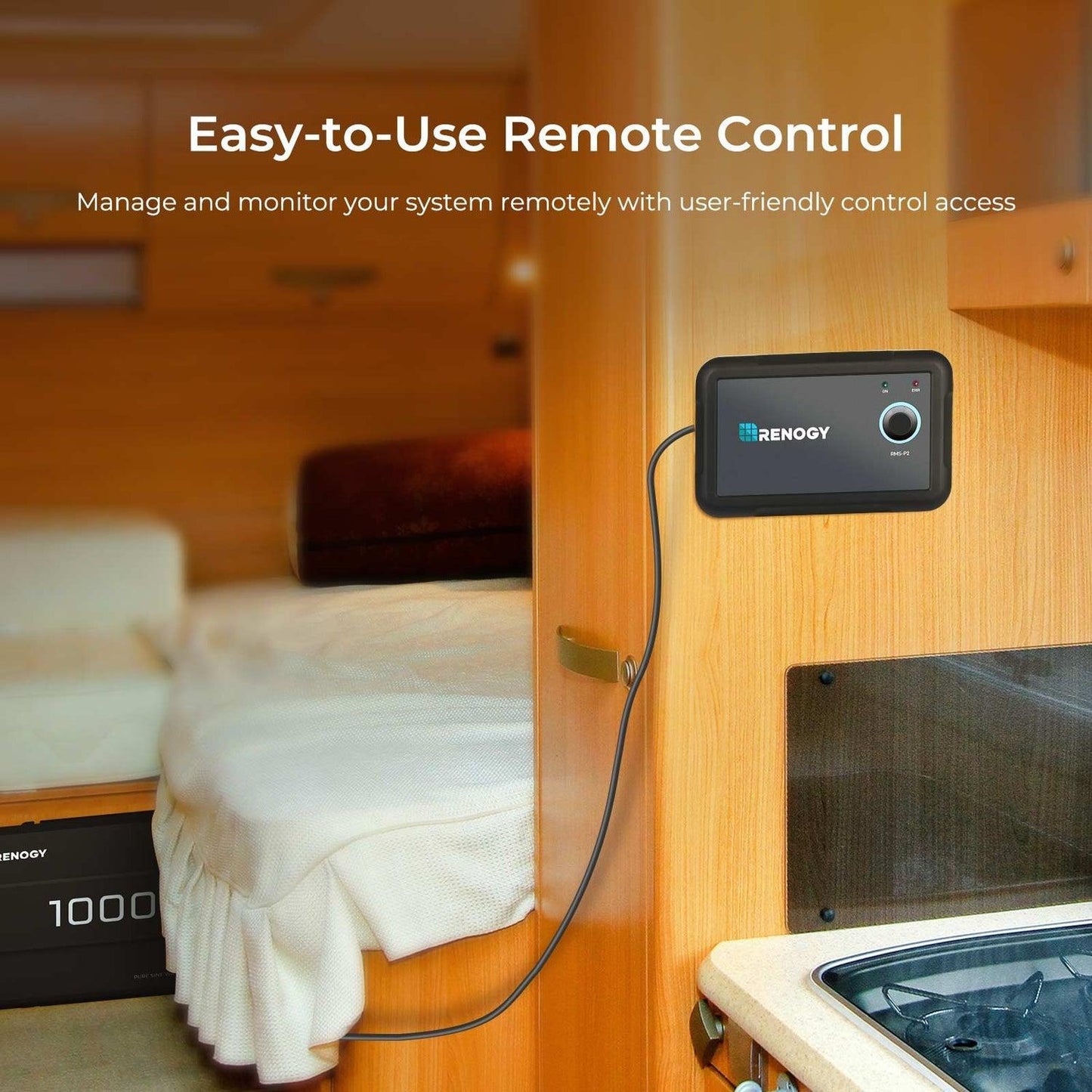
Les protections intégrées contre les surcharges, les courts-circuits, les surchauffes et les basses tensions garantissent un fonctionnement sûr, avec une télécommande filaire de 4,9 m pour une surveillance et un contrôle pratiques.

Élégant et portable, pesant 3,4 kg (7,5 lb) et mesurant 13,4 x 7,6 x 2,8 pouces, il est certifié ETL pour la qualité. Prix : 229,99 $

L'onduleur à onde sinusoïdale pure Renogy 1000W 12V transforme le courant continu en courant alternatif, offre un fonctionnement silencieux avec de légers bourdonnements et protège vos appareils électroniques, en toute sécurité et fiabilité.

Manuel

Garantie

Expédition

Les commandes sont traitées dans un délai de 1 à 3 jours ouvrables. La livraison prend généralement 7 à 14 jours ouvrables pour les commandes nationales et 10 à 20 jours pour les expéditions internationales. Les informations de suivi vous seront communiquées une fois votre commande expédiée.

Afficher tous les détails

Ships from: CAN

Recently Viewed

Frequently Asked Questions

Start with four basics: waveform, wattage, efficiency, and safety protections. A pure sine wave inverter is usually the best choice if you plan to run sensitive electronics like laptops, TVs, routers, CPAP machines, or some medical devices, because it delivers cleaner, more stable AC power than modified sine wave models. Next, match the inverter's continuous wattage to the devices you want to run, and check surge capacity for items that draw extra power at startup. The Renogy 1000W 12V Pure Sine Wave Inverter is built for this type of use. It provides 1000W continuous output, 2000W surge capacity, over 90% efficiency, and less than 3% total harmonic distortion. It also includes overload, short circuit, overheat, and low-voltage protection, which matter for both battery health and everyday safety. This size works best for light-to-moderate loads in RVs, trucks, boats, camping setups, and small backup systems. The main tradeoff is capacity: 1000W is a practical fit for electronics and smaller appliances, but not for heavy resistive loads or large air conditioners.
It depends on the actual running watts and startup surge of each device, but for many common essentials, a 1000W pure sine wave inverter is often a good fit. Laptops, phone chargers, routers, CPAP machines, and most TVs typically fall well within this range. Some compact or energy-efficient fridges may also work if their startup surge stays below the inverter's 2000W surge rating. The Renogy 1000W 12V Pure Sine Wave Inverter delivers 120V AC from a 12V battery system, with 1000W continuous output and 2000W surge capacity. Because it uses pure sine wave output, it is better suited for sensitive electronics than lower-cost inverter types. Its low harmonic distortion, under 3%, helps provide stable power for devices that can react poorly to rougher power output. The key limitation is that appliance labels do not always show startup surge. Before buying, add up the running watts of everything you want to power and check whether any motor-driven devices, like fridges or fans, need extra startup power. Also remember that runtime depends on your battery capacity, not just the inverter.
A pure sine wave inverter is the safer, more compatible option if you want utility-like AC power from a battery. It produces cleaner electricity, which is better for sensitive devices such as laptops, TVs, CPAP machines, battery chargers, and certain medical or communications equipment. In many setups, it can also reduce buzzing, overheating, or charging issues that sometimes happen with modified sine wave inverters. The Renogy 1000W 12V Pure Sine Wave Inverter is designed around that cleaner power standard. It outputs 120V AC, keeps total harmonic distortion below 3%, and operates at over 90% efficiency. For camping, RVs, boats, trucks, and off-grid systems, that combination helps when quiet, stable power matters. It also includes an ECO mode with idle consumption under 1W, plus a 16.4 ft wired remote for easier control and monitoring. The tradeoff is that pure sine wave models are typically chosen for power quality rather than maximum raw output for the lowest cost. If your priority is running electronics reliably and avoiding compatibility problems, pure sine wave is usually the better long-term choice.

Frequently Asked Questions

Start with four basics: waveform, wattage, efficiency, and safety protections. A pure sine wave inverter is usually the best choice if you plan to run sensitive electronics like laptops, TVs, routers, CPAP machines, or some medical devices, because it delivers cleaner, more stable AC power than modified sine wave models. Next, match the inverter's continuous wattage to the devices you want to run, and check surge capacity for items that draw extra power at startup. The Renogy 1000W 12V Pure Sine Wave Inverter is built for this type of use. It provides 1000W continuous output, 2000W surge capacity, over 90% efficiency, and less than 3% total harmonic distortion. It also includes overload, short circuit, overheat, and low-voltage protection, which matter for both battery health and everyday safety. This size works best for light-to-moderate loads in RVs, trucks, boats, camping setups, and small backup systems. The main tradeoff is capacity: 1000W is a practical fit for electronics and smaller appliances, but not for heavy resistive loads or large air conditioners.
It depends on the actual running watts and startup surge of each device, but for many common essentials, a 1000W pure sine wave inverter is often a good fit. Laptops, phone chargers, routers, CPAP machines, and most TVs typically fall well within this range. Some compact or energy-efficient fridges may also work if their startup surge stays below the inverter's 2000W surge rating. The Renogy 1000W 12V Pure Sine Wave Inverter delivers 120V AC from a 12V battery system, with 1000W continuous output and 2000W surge capacity. Because it uses pure sine wave output, it is better suited for sensitive electronics than lower-cost inverter types. Its low harmonic distortion, under 3%, helps provide stable power for devices that can react poorly to rougher power output. The key limitation is that appliance labels do not always show startup surge. Before buying, add up the running watts of everything you want to power and check whether any motor-driven devices, like fridges or fans, need extra startup power. Also remember that runtime depends on your battery capacity, not just the inverter.
A pure sine wave inverter is the safer, more compatible option if you want utility-like AC power from a battery. It produces cleaner electricity, which is better for sensitive devices such as laptops, TVs, CPAP machines, battery chargers, and certain medical or communications equipment. In many setups, it can also reduce buzzing, overheating, or charging issues that sometimes happen with modified sine wave inverters. The Renogy 1000W 12V Pure Sine Wave Inverter is designed around that cleaner power standard. It outputs 120V AC, keeps total harmonic distortion below 3%, and operates at over 90% efficiency. For camping, RVs, boats, trucks, and off-grid systems, that combination helps when quiet, stable power matters. It also includes an ECO mode with idle consumption under 1W, plus a 16.4 ft wired remote for easier control and monitoring. The tradeoff is that pure sine wave models are typically chosen for power quality rather than maximum raw output for the lowest cost. If your priority is running electronics reliably and avoiding compatibility problems, pure sine wave is usually the better long-term choice.