Passer aux informations produits
1 de 15

Chargeur de batterie de bord CC-CC à double entrée 30A 12V DCC30S avec MPPT

Chargeur de batterie de bord CC-CC à double entrée 30A 12V DCC30S avec MPPT

Prix habituel $331.00 CAD
Prix habituel $371.00 CAD Prix promotionnel $331.00 CAD
Promotion Épuisé
Quantité
DESCRIPTION

Optimisez vos aventures grâce à ce chargeur de batterie CC-CC, le Renogy DCC30S. C’est une solution embarquée compacte et efficace pour les camping-cars, les bateaux et les installations hors réseau.

Il est conçu pour des installations propres dans des espaces restreints. Il aide également à maintenir les batteries de service chargées pendant vos déplacements.

Chargeur de batterie CC-CC avec double entrée + MPPT

Ce chargeur 30 A, 12 V utilise des entrées doubles. Il peut s'alimenter à partir de votre alternateur et de votre parc solaire.

Son suivi du point de puissance maximale (MPPT) intégré permet d'optimiser la récolte solaire. Il peut offrir jusqu'à 30 % d'efficacité supplémentaire en cas de lumière changeante.

Cela inclut l'ombre partielle et les conditions météorologiques variables. Il est conçu pour maintenir une charge stable en mouvement.

Grâce à la charge multi-étapes (vrac, absorption et flottante), il charge plus rapidement et plus sûrement. Il prend en charge les batteries au plomb, AGM, gel et lithium.

Le profil de charge contribue à réduire les risques de surcharge. Il favorise également la santé à long terme de la batterie lors d'une utilisation quotidienne.

La surveillance Bluetooth fonctionne avec l'application Renogy. Vous pouvez vérifier l'état de charge et les données de performance clés en temps réel.

C'est utile lorsque l'unité est montée sous un siège ou dans un compartiment de rangement.

Léger avec seulement 1,42 kg (3,13 lb), il est facile à manipuler lors de l'installation. Sa taille compacte est de 9,6 x 5,7 x 3,0 pouces.

Il convient parfaitement aux constructions mobiles soucieuses de l'espace. Planifiez la ventilation et le routage des câbles conformément au manuel.

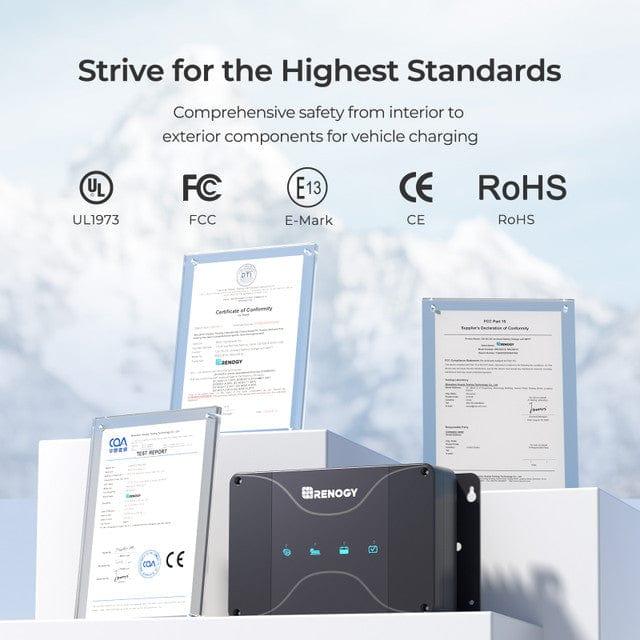
Certifié CE, RoHS et FCC, le DCC30S est conçu pour une utilisation fiable. C'est un excellent choix si vous souhaitez une installation propre et protégée.

Si vous comparez des options comme une configuration de batterie 800 ou un chargeur dcdc kings, concentrez-vous sur votre plan de câblage et vos sources d'entrée.

Pour les longs trajets, un chargeur de qualité permet de garder votre système prêt pour le prochain arrêt.

Manuel

Garantie

Expédition

Les commandes sont traitées dans un délai de 1 à 3 jours ouvrables. La livraison prend généralement 7 à 14 jours ouvrables pour les commandes nationales et 10 à 20 jours pour les expéditions internationales. Les informations de suivi vous seront communiquées une fois votre commande expédiée.

Afficher tous les détails

Ships from: CAN

Recently Viewed

Frequently Asked Questions

A DC-DC charger with solar input is one of the best options if you want to charge a 12V house battery both while traveling and while parked. The Renogy DCC30S is designed for exactly that job because it combines dual-input charging from your vehicle alternator and solar panels, then manages charging through built-in MPPT optimization. This setup is especially useful for RVs, vans, and boats that rely on a separate house battery for fridges, lights, CPAP machines, fans, or electronics. While driving, the charger can take power from the alternator. When parked, it can keep charging from solar, which helps maintain battery levels without needing shore power or a generator. The 30A charging output fits many small to mid-size mobile power systems, and it supports lead-acid, AGM, gel, and lithium batteries. Bluetooth monitoring also helps you check charging status from an app instead of guessing. The main tradeoff is that it is a 12V, 30A unit, so it is best for systems that match that voltage and charging rate rather than large high-capacity banks that may need more charging current.
A DC-DC battery charger with MPPT does more than a basic charger or battery isolator. The Renogy DCC30S actively regulates charging for a 12V house battery and can use two power sources: the vehicle alternator and solar panels. A simple isolator mainly connects and separates batteries, but it usually does not provide multi-stage charging or optimize solar input. The MPPT function is important because it improves solar charging efficiency as sunlight conditions change. That makes it better suited for off-grid travel, RV camping, and boats where solar output can vary throughout the day. The DCC30S also supports multiple battery chemistries, including lead-acid, AGM, gel, and lithium, which gives it more flexibility than many basic chargers. This type of charger is best for people who want cleaner, more controlled charging and better battery health over time. The tradeoff is that it requires a proper installation and is more specialized than a simple charger. If your goal is maintaining a dedicated house battery from both driving and solar, a DC-DC charger with MPPT is usually the better fit.
Yes, the Renogy DCC30S is a strong option for lithium batteries if you need a compact 12V charger for an RV, boat, van, or other mobile off-grid setup. It supports lithium battery charging and delivers up to 30A, which is suitable for many small and mid-size house battery systems that need steady charging from both an alternator and solar panels. Its compact size, 9.6 x 5.7 x 3.0 inches, and light 3.13 lb build make it practical for tighter installation spaces where larger charging equipment can be difficult to fit. The built-in Bluetooth monitoring is also useful for lithium users because you can check charging data through the app without needing separate display hardware. This charger is best for users who want efficient charging management and do not want separate devices for alternator charging and solar charging. It also works with other battery types, so it fits mixed upgrade paths. The key limitation is capacity planning: at 30A, it is ideal for many everyday mobile systems, but very large lithium banks may charge more slowly than they would with a higher-amperage charger.

Frequently Asked Questions

A DC-DC charger with solar input is one of the best options if you want to charge a 12V house battery both while traveling and while parked. The Renogy DCC30S is designed for exactly that job because it combines dual-input charging from your vehicle alternator and solar panels, then manages charging through built-in MPPT optimization. This setup is especially useful for RVs, vans, and boats that rely on a separate house battery for fridges, lights, CPAP machines, fans, or electronics. While driving, the charger can take power from the alternator. When parked, it can keep charging from solar, which helps maintain battery levels without needing shore power or a generator. The 30A charging output fits many small to mid-size mobile power systems, and it supports lead-acid, AGM, gel, and lithium batteries. Bluetooth monitoring also helps you check charging status from an app instead of guessing. The main tradeoff is that it is a 12V, 30A unit, so it is best for systems that match that voltage and charging rate rather than large high-capacity banks that may need more charging current.
A DC-DC battery charger with MPPT does more than a basic charger or battery isolator. The Renogy DCC30S actively regulates charging for a 12V house battery and can use two power sources: the vehicle alternator and solar panels. A simple isolator mainly connects and separates batteries, but it usually does not provide multi-stage charging or optimize solar input. The MPPT function is important because it improves solar charging efficiency as sunlight conditions change. That makes it better suited for off-grid travel, RV camping, and boats where solar output can vary throughout the day. The DCC30S also supports multiple battery chemistries, including lead-acid, AGM, gel, and lithium, which gives it more flexibility than many basic chargers. This type of charger is best for people who want cleaner, more controlled charging and better battery health over time. The tradeoff is that it requires a proper installation and is more specialized than a simple charger. If your goal is maintaining a dedicated house battery from both driving and solar, a DC-DC charger with MPPT is usually the better fit.
Yes, the Renogy DCC30S is a strong option for lithium batteries if you need a compact 12V charger for an RV, boat, van, or other mobile off-grid setup. It supports lithium battery charging and delivers up to 30A, which is suitable for many small and mid-size house battery systems that need steady charging from both an alternator and solar panels. Its compact size, 9.6 x 5.7 x 3.0 inches, and light 3.13 lb build make it practical for tighter installation spaces where larger charging equipment can be difficult to fit. The built-in Bluetooth monitoring is also useful for lithium users because you can check charging data through the app without needing separate display hardware. This charger is best for users who want efficient charging management and do not want separate devices for alternator charging and solar charging. It also works with other battery types, so it fits mixed upgrade paths. The key limitation is capacity planning: at 30A, it is ideal for many everyday mobile systems, but very large lithium banks may charge more slowly than they would with a higher-amperage charger.