Skip to product information
1 of 6

Renogy 400W Lightweight Portable Solar Suitcase, Foldable Solar Panel for Outdoor Activities, Durable & IP67 Waterproof for RV,

Renogy 400W Lightweight Portable Solar Suitcase, Foldable Solar Panel for Outdoor Activities, Durable & IP67 Waterproof for RV,

Regular price $1,250.00 CAD
Regular price $1,562.00 CAD Sale price $1,250.00 CAD
Sale Sold out
Wattage
Ships From
Quantity
DESCRIPTION

SPECIFICATIONS

  • Compact and Lightweight - Featuring a compact solar cell layout, this 400 watt solar panel weighs a mere 30.2lbs and boasts a smaller size than traditional 400W one-piece laminated assemblies, ensuring easy portability on the go.
  • Premium Materials for Decades of Use - Reinforced with fiberglass material, Renogy 400W compact mono portable solar suitcase features EL-tested Grade A+ solar cells, delivering the highest power conversion efficiency and an extended lifespan.
  • Fast Installation with Sturdy Kickstands - Featuring durable aluminum alloy construction, the robust foldable kickstands of this camper solar panel enable one-minute installation. Designed for off-grid solar systems, this compact 400 watt solar panel seamlessly connects to most portable power stations on the market via IP68 solar connectors.
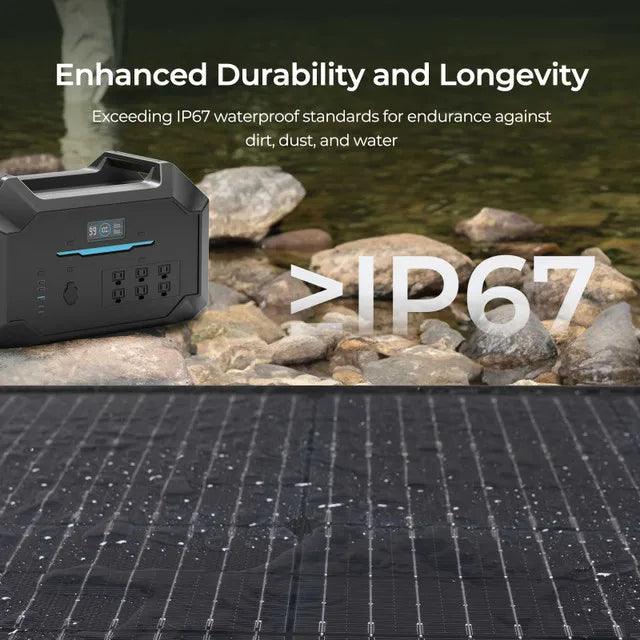
  • Environmental Endurance - Employing ≥IP67 protection and ETFE coating, this all-weather suitcase excels in enduring snow, rain, and even light hail for decades. Enhanced with advanced materials including an aluminum backsheet, it ensures exceptional performance in any condition.
  • 3-year material and
  • workmanship warranty
Shipping

Orders are processed within 1-3 business days. Delivery typically takes 7-14 business days for domestic orders and 10-20 days for international shipments. Tracking information will be provided once your order ships.

View full details

Recently Viewed

Frequently Asked Questions

The best portable solar panel for camping, RV use, or outage backup should balance wattage, weight, durability, setup speed, and compatibility with your power station. A higher wattage panel can recharge batteries faster, but many 400W panels are bulky and harder to carry. This model is designed to solve that tradeoff with a compact cell layout and a weight of about 30.2 pounds, which is relatively light for a 400W suitcase-style panel. It also uses foldable kickstands for quick positioning and connects to most portable power stations through standard solar connectors, which matters if you want a simple off-grid setup without extra complexity. For outdoor use, weather resistance is just as important as output. This panel is rated at least IP67 and uses an ETFE-coated surface plus reinforced fiberglass and an aluminum backsheet to handle rain, snow, and regular travel use. It is a strong fit for RV owners, campers, and homeowners who want fast solar charging in a portable format. The main tradeoff is that a 400W panel is still larger than small backpacking panels, so it is better for vehicle-based travel and backup power than ultralight hiking.
A 400W foldable solar suitcase is usually the better choice if you need portability, quick setup, and the ability to move the panel during the day. A rigid panel is often better for permanent mounting on an RV, cabin, or roof where portability is not important. This portable suitcase panel is made for flexible use, with a foldable design, compact layout, and aluminum alloy kickstands that support one-minute setup. For temporary off-grid charging, that convenience matters. You can place the panel in direct sun, angle it more easily, and store it when not in use. It is also reinforced with fiberglass and protected by ETFE coating and at least IP67 weather resistance, so it is built for outdoor conditions rather than casual indoor-only use. This style works best for campers, RV travelers, and homeowners who want solar charging without committing to a fixed installation. The tradeoff is that a suitcase panel typically needs to be unfolded, positioned, and packed away manually, while rigid panels are more hands-off once installed. If you want mobile solar power for a portable power station or battery setup, a foldable 400W suitcase is often the more practical option.
Yes, this 400W portable solar panel is designed to work with most portable power stations and many off-grid battery setups, provided the input specifications match your system. It connects through standard IP68 solar connectors, which makes it broadly compatible with many power stations and solar charging setups on the market. That is especially useful for RV users, campers, and homeowners building a flexible backup system. The panel is best suited for charging portable power stations, lithium battery systems, and other solar-ready setups that use a compatible charge controller or solar input. If you are pairing it with a battery bank directly, you should confirm that your charge controller can safely handle the panel's output. Compatibility depends on your system's voltage and input limits, not just the connector type. This is a good option for users who want one panel they can use across different off-grid situations, from travel to emergency power. The main limitation is that no solar panel is universally plug-and-play with every battery system, so checking your power station or controller specifications before buying is still important.

Frequently Asked Questions

The best portable solar panel for camping, RV use, or outage backup should balance wattage, weight, durability, setup speed, and compatibility with your power station. A higher wattage panel can recharge batteries faster, but many 400W panels are bulky and harder to carry. This model is designed to solve that tradeoff with a compact cell layout and a weight of about 30.2 pounds, which is relatively light for a 400W suitcase-style panel. It also uses foldable kickstands for quick positioning and connects to most portable power stations through standard solar connectors, which matters if you want a simple off-grid setup without extra complexity. For outdoor use, weather resistance is just as important as output. This panel is rated at least IP67 and uses an ETFE-coated surface plus reinforced fiberglass and an aluminum backsheet to handle rain, snow, and regular travel use. It is a strong fit for RV owners, campers, and homeowners who want fast solar charging in a portable format. The main tradeoff is that a 400W panel is still larger than small backpacking panels, so it is better for vehicle-based travel and backup power than ultralight hiking.
A 400W foldable solar suitcase is usually the better choice if you need portability, quick setup, and the ability to move the panel during the day. A rigid panel is often better for permanent mounting on an RV, cabin, or roof where portability is not important. This portable suitcase panel is made for flexible use, with a foldable design, compact layout, and aluminum alloy kickstands that support one-minute setup. For temporary off-grid charging, that convenience matters. You can place the panel in direct sun, angle it more easily, and store it when not in use. It is also reinforced with fiberglass and protected by ETFE coating and at least IP67 weather resistance, so it is built for outdoor conditions rather than casual indoor-only use. This style works best for campers, RV travelers, and homeowners who want solar charging without committing to a fixed installation. The tradeoff is that a suitcase panel typically needs to be unfolded, positioned, and packed away manually, while rigid panels are more hands-off once installed. If you want mobile solar power for a portable power station or battery setup, a foldable 400W suitcase is often the more practical option.
Yes, this 400W portable solar panel is designed to work with most portable power stations and many off-grid battery setups, provided the input specifications match your system. It connects through standard IP68 solar connectors, which makes it broadly compatible with many power stations and solar charging setups on the market. That is especially useful for RV users, campers, and homeowners building a flexible backup system. The panel is best suited for charging portable power stations, lithium battery systems, and other solar-ready setups that use a compatible charge controller or solar input. If you are pairing it with a battery bank directly, you should confirm that your charge controller can safely handle the panel's output. Compatibility depends on your system's voltage and input limits, not just the connector type. This is a good option for users who want one panel they can use across different off-grid situations, from travel to emergency power. The main limitation is that no solar panel is universally plug-and-play with every battery system, so checking your power station or controller specifications before buying is still important.