Skip to product information
1 of 15

Renogy DCC30S 30A DC-DC Battery Charger with MPPT and Bluetooth Monitoring

Renogy DCC30S 30A DC-DC Battery Charger with MPPT and Bluetooth Monitoring

Regular price $331.00 CAD
Regular price $371.00 CAD Sale price $331.00 CAD
Sale Sold out
Quantity
DESCRIPTION

The Renogy DCC30S is a compact 30A DC-DC battery charger designed for RVs, boats, and off-grid systems. With dual-input charging, MPPT solar optimization, and Bluetooth app monitoring, it helps keep your house battery charged efficiently while traveling or parked. Its lightweight, space-saving design makes it a practical choice for clean and reliable mobile power setups.

KEY FEATURES

  • Dual Input Charging: Uses alternator and solar power together
  • MPPT Optimization: Improves solar charging efficiency in changing conditions
  • Bluetooth Monitoring: Check charging data through the Renogy app
  • Multi-Battery Support: Works with lead-acid, AGM, gel, and lithium batteries
  • Compact Design: Lightweight unit built for tight installation spaces

SPECIFICATIONS

  • Product Name: Renogy DCC30S DC-DC Battery Charger
  • Charging Current: 30A
  • System Voltage: 12V
  • Input Type: Dual Input (Alternator + Solar)
  • Solar Technology: MPPT
  • Battery Compatibility: Lead-Acid, AGM, Gel, Lithium
  • Connectivity: Bluetooth App Monitoring
  • Weight: 3.13 lbs (1.42 kg)
  • Dimensions: 9.6 x 5.7 x 3.0 in
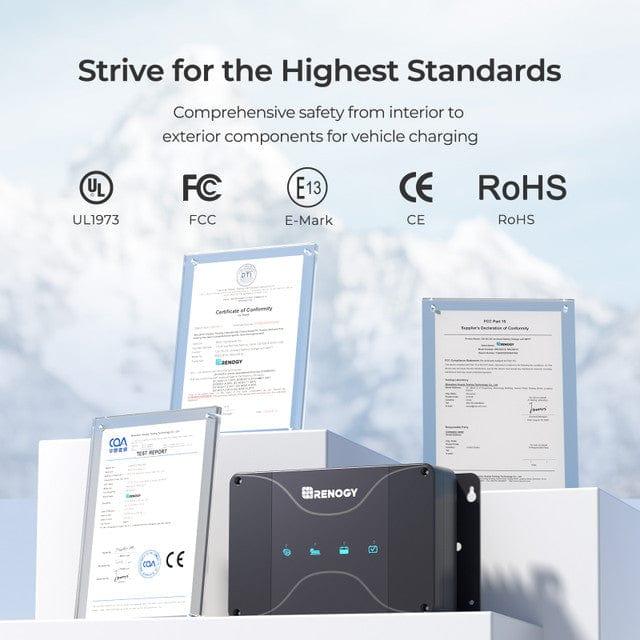
  • Certifications: CE, RoHS, FCC
  • Application: RV, Boat, Off-Grid, Mobile Power Systems
Shipping

Orders are processed within 1-3 business days. Delivery typically takes 7-14 business days for domestic orders and 10-20 days for international shipments. Tracking information will be provided once your order ships.

View full details

Ships from: CAN

Recently Viewed

Frequently Asked Questions

A DC-DC charger with solar input is one of the best options if you want to charge a 12V house battery both while traveling and while parked. The Renogy DCC30S is designed for exactly that job because it combines dual-input charging from your vehicle alternator and solar panels, then manages charging through built-in MPPT optimization. This setup is especially useful for RVs, vans, and boats that rely on a separate house battery for fridges, lights, CPAP machines, fans, or electronics. While driving, the charger can take power from the alternator. When parked, it can keep charging from solar, which helps maintain battery levels without needing shore power or a generator. The 30A charging output fits many small to mid-size mobile power systems, and it supports lead-acid, AGM, gel, and lithium batteries. Bluetooth monitoring also helps you check charging status from an app instead of guessing. The main tradeoff is that it is a 12V, 30A unit, so it is best for systems that match that voltage and charging rate rather than large high-capacity banks that may need more charging current.
A DC-DC battery charger with MPPT does more than a basic charger or battery isolator. The Renogy DCC30S actively regulates charging for a 12V house battery and can use two power sources: the vehicle alternator and solar panels. A simple isolator mainly connects and separates batteries, but it usually does not provide multi-stage charging or optimize solar input. The MPPT function is important because it improves solar charging efficiency as sunlight conditions change. That makes it better suited for off-grid travel, RV camping, and boats where solar output can vary throughout the day. The DCC30S also supports multiple battery chemistries, including lead-acid, AGM, gel, and lithium, which gives it more flexibility than many basic chargers. This type of charger is best for people who want cleaner, more controlled charging and better battery health over time. The tradeoff is that it requires a proper installation and is more specialized than a simple charger. If your goal is maintaining a dedicated house battery from both driving and solar, a DC-DC charger with MPPT is usually the better fit.
Yes, the Renogy DCC30S is a strong option for lithium batteries if you need a compact 12V charger for an RV, boat, van, or other mobile off-grid setup. It supports lithium battery charging and delivers up to 30A, which is suitable for many small and mid-size house battery systems that need steady charging from both an alternator and solar panels. Its compact size, 9.6 x 5.7 x 3.0 inches, and light 3.13 lb build make it practical for tighter installation spaces where larger charging equipment can be difficult to fit. The built-in Bluetooth monitoring is also useful for lithium users because you can check charging data through the app without needing separate display hardware. This charger is best for users who want efficient charging management and do not want separate devices for alternator charging and solar charging. It also works with other battery types, so it fits mixed upgrade paths. The key limitation is capacity planning: at 30A, it is ideal for many everyday mobile systems, but very large lithium banks may charge more slowly than they would with a higher-amperage charger.

Frequently Asked Questions

A DC-DC charger with solar input is one of the best options if you want to charge a 12V house battery both while traveling and while parked. The Renogy DCC30S is designed for exactly that job because it combines dual-input charging from your vehicle alternator and solar panels, then manages charging through built-in MPPT optimization. This setup is especially useful for RVs, vans, and boats that rely on a separate house battery for fridges, lights, CPAP machines, fans, or electronics. While driving, the charger can take power from the alternator. When parked, it can keep charging from solar, which helps maintain battery levels without needing shore power or a generator. The 30A charging output fits many small to mid-size mobile power systems, and it supports lead-acid, AGM, gel, and lithium batteries. Bluetooth monitoring also helps you check charging status from an app instead of guessing. The main tradeoff is that it is a 12V, 30A unit, so it is best for systems that match that voltage and charging rate rather than large high-capacity banks that may need more charging current.
A DC-DC battery charger with MPPT does more than a basic charger or battery isolator. The Renogy DCC30S actively regulates charging for a 12V house battery and can use two power sources: the vehicle alternator and solar panels. A simple isolator mainly connects and separates batteries, but it usually does not provide multi-stage charging or optimize solar input. The MPPT function is important because it improves solar charging efficiency as sunlight conditions change. That makes it better suited for off-grid travel, RV camping, and boats where solar output can vary throughout the day. The DCC30S also supports multiple battery chemistries, including lead-acid, AGM, gel, and lithium, which gives it more flexibility than many basic chargers. This type of charger is best for people who want cleaner, more controlled charging and better battery health over time. The tradeoff is that it requires a proper installation and is more specialized than a simple charger. If your goal is maintaining a dedicated house battery from both driving and solar, a DC-DC charger with MPPT is usually the better fit.
Yes, the Renogy DCC30S is a strong option for lithium batteries if you need a compact 12V charger for an RV, boat, van, or other mobile off-grid setup. It supports lithium battery charging and delivers up to 30A, which is suitable for many small and mid-size house battery systems that need steady charging from both an alternator and solar panels. Its compact size, 9.6 x 5.7 x 3.0 inches, and light 3.13 lb build make it practical for tighter installation spaces where larger charging equipment can be difficult to fit. The built-in Bluetooth monitoring is also useful for lithium users because you can check charging data through the app without needing separate display hardware. This charger is best for users who want efficient charging management and do not want separate devices for alternator charging and solar charging. It also works with other battery types, so it fits mixed upgrade paths. The key limitation is capacity planning: at 30A, it is ideal for many everyday mobile systems, but very large lithium banks may charge more slowly than they would with a higher-amperage charger.